In the fast-paced world of esports, where strategy meets spectacle, broadcast analysis has become the unsung hero of the gaming universe. Imagine tuning in to a nail-biting match, only to have a knowledgeable analyst break down every play with the finesse of a seasoned chef slicing through a perfectly cooked steak. It’s not just about the gameplay; it’s about understanding the intricacies that make each match a rollercoaster of emotions.
Overview of Esports Broadcast Analysis
Esports broadcast analysis plays a pivotal role in enriching the audience’s experience during live events. Analysts break down gameplay elements, providing viewers with insights that elevate their understanding of strategies and player decisions. During matches, these analysts highlight critical moments and dissect plays, creating an engaging narrative that captivates fans.
Analytical tools enhance the depth of coverage by revealing statistics and trends that inform predictions about team performance. With the use of real-time data, analysts can illustrate player movement, skill usage, and decision-making processes. Expert commentators often rely on this analysis to explain the intricacies of tactics, making the viewing experience more immersive.
Viewers benefit from multiple angles and perspectives provided by analysts, ensuring a comprehensive grasp of the game. Analysts focus on key players, discussing their strengths and weaknesses while linking their performances to broader team strategies. Such insights contribute to heightened emotional engagement, as viewers connect with players and teams on a personal level.
Incorporating visuals aids in translating complex information into understandable content. Graphs, charts, and overlays serve as effective tools for summarizing crucial data, allowing fans to absorb information quickly. By implementing these elements, broadcast analysis transforms conventional esports matches into dynamic storytelling experiences.
Ultimately, esports broadcast analysis shapes how fans interact with the games. Analysts create connections between in-game events and the emotional journeys of players, enriching the competitive atmosphere. As a result, a well-executed broadcast analysis not only informs audiences but also amplifies their investment in the esports community.
Importance of Esports Broadcast Analysis
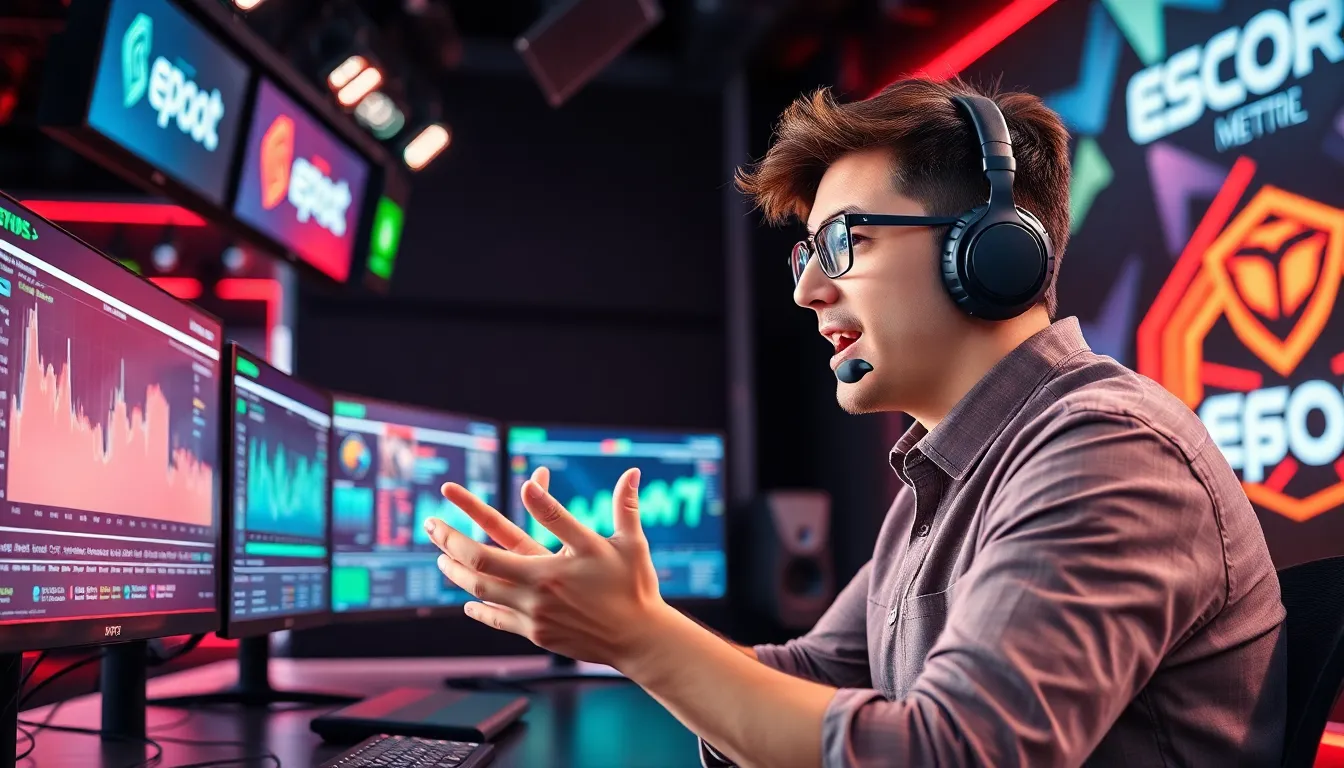
Esports broadcast analysis plays a vital role in shaping a viewer’s experience. Analysts enrich the narrative of matches through their expertise.
Enhancing Viewer Engagement
Analysts engage viewers by providing deeper insights into gameplay. They dissect strategies and player decisions, creating moments that resonate emotionally. Each revelation adds excitement to the match flow. By highlighting critical plays or missteps, analysts elevate the stakes. Live analysis allows audiences to anticipate plays, generating a more invested fanbase. Viewers gain a sense of involvement, feeling connected to the strategies unfolding on-screen. With enhanced commentary and real-time data, analysts make every moment captivating and memorable. The experience transforms from passive watching into active participation, fostering a closer connection between fans and the teams.
Improving Content Quality
Content quality improves significantly with expert analysis during broadcasts. Analysts utilize statistical tools to present relevant trends and insights. Charts and graphs clarify complex information, making it digestible for viewers. Focusing on specific player performances helps audiences appreciate their skill sets and contributions. Analysts bring attention to match dynamics and strategies, allowing for a fuller understanding of the gameplay. These elements contribute to a richer viewing experience. The storytelling aspect of matches benefits from informed commentary as it adds layers to narratives surrounding rivalries or player histories. Overall, such elevated content quality enhances tournament excitement and community engagement.
Key Components of Esports Broadcast Analysis
Esports broadcast analysis involves critical components that enhance the viewing experience for fans and stakeholders. Understanding these components leads to a more enriching broadcast.
Viewership Metrics
Viewership metrics provide insight into audience engagement. Key indicators include average viewership counts, peak concurrent viewers, and total watch hours. Analysts track demographic data, revealing viewer preferences and behavior. By examining these trends, analysts determine which games attract specific audiences. Also, interactive features like polls and real-time feedback enhance engagement. The aggregated metrics help stakeholders strategize future broadcasts based on viewer interests.
Content Assessment
Assessing content quality plays a crucial role in broadcast analysis. Analysts evaluate the relevance and effectiveness of commentary during matches. They examine how well the commentary aligns with viewer expectations, ensuring it remains engaging. Analysts also explore audience feedback and sentiments to identify areas for improvement. Content richness is measured by the depth of insights provided on gameplay and player strategies. The analysis fosters improved storytelling through enhanced narrative flows and impactful highlights.
Technical Quality
Technical quality significantly impacts the overall viewing experience. Elements such as video resolution, audio clarity, and stream stability matter greatly. Analysts scrutinize these technical aspects to ensure seamless broadcasts. Effective troubleshooting protocols are vital for minimizing disruptions. Additionally, investments in advanced streaming technology improve overall broadcast quality. High technical standards lead to a more enjoyable experience for viewers, fostering long-term audience loyalty.
Challenges in Esports Broadcast Analysis
Broadcast analysis in esports faces significant challenges that impact the quality of viewer engagement. Constant changes in the industry require analysts to adapt swiftly to new formats and trends.
Rapid Evolution of Esports
Esports changes rapidly, influenced by both technology and player dynamics. New games emerge frequently, with evolving gameplay and rules that analysts must master. Keeping up with these shifts ensures analysts provide relevant insights. Match formats also transform, leading to different strategies that require immediate analysis. Failure to adapt may result in outdated commentary that loses viewer interest. The need for continuous training and education is vital, as analysts navigate these constant changes to maintain audience connection.
Data Collection Limitations
Data collection presents another challenge in esports broadcast analysis. Limited access to comprehensive datasets can hinder the depth of insights provided. While real-time data analytics tools assist analysts, gaps in available information often restrict their analysis. Qualitative data, such as player psychology, remains difficult to quantify, impacting strategic assessment. Additionally, discrepancies in data reliability can lead to misinterpretations during broadcasts. Overcoming these limitations necessitates collaboration between analysts, developers, and tournament organizers to enhance data accessibility, ultimately leading to more accurate insights for viewers.
Future Trends in Esports Broadcast Analysis
The future of esports broadcast analysis is poised for innovation and transformation. Analysts are set to leverage advanced technologies and personalized experiences to enhance engagement.
Integration of AI and Machine Learning
AI and machine learning represent significant trends in esports broadcast analysis. These technologies enable real-time data processing, allowing analysts to generate timely insights during matches. Automated tracking systems can gather player and team statistics with accuracy, making detailed analysis more efficient. Predictive analytics will enhance viewers’ experiences by forecasting match outcomes based on historical performance data. This integration will elevate strategic discussions, providing deeper context to the decisions made by players and coaches. Overall, the incorporation of AI and machine learning promises to streamline broadcast processes while enriching viewer interactions.
Increased Focus on Personalized Content
Analysts will increasingly emphasize personalized content in esports broadcasts. Tailored experiences will cater to individual viewer preferences, fostering deeper connections with teams and players. Sophisticated algorithms can analyze viewer behaviors to curate content that aligns with their interests. By highlighting specific player narratives or rivalries, broadcasts will captivate diverse audience segments. This shift towards personalization invites viewers to engage with content that resonates on a personal level, driving loyalty to both analysts and teams. Enhanced viewer experiences through personalized analysis will reshape the landscape of esports broadcasting in the coming years.
Esports broadcast analysis is transforming the way fans engage with their favorite games. By providing expert insights and breaking down complex strategies, analysts create a more immersive viewing experience. This depth not only enhances the excitement of matches but also fosters a stronger connection between fans and players.
As technology evolves, so will the methods of analysis. The integration of AI and machine learning promises to elevate broadcasts further, offering real-time insights and personalized content. This ongoing evolution will ensure that esports remains dynamic and engaging, keeping fans invested in the thrilling world of competitive gaming.